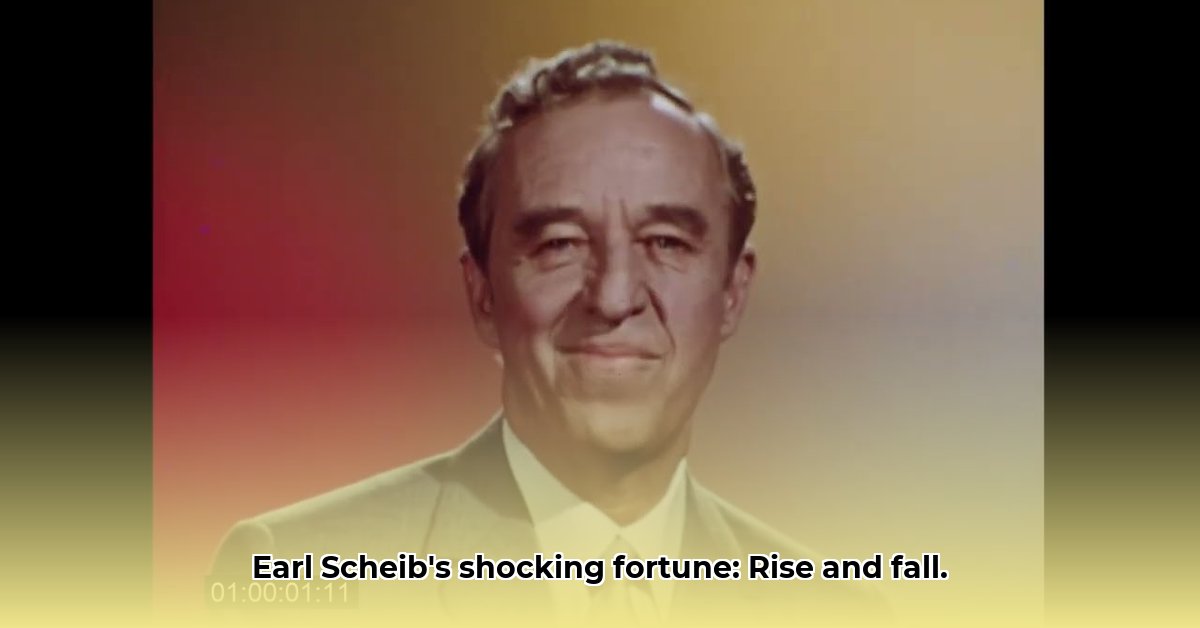
Earl Scheib: The $29.95 Revolution and its Demise
Earl Scheib. The name evokes images of quick, cheap car painting—a cultural phenomenon built on a seemingly simple yet revolutionary business model. But the story of Earl Scheib, Inc. is far more nuanced than a mere "$29.95 paint job." It's a compelling case study in disruptive innovation, rapid growth, and the ultimate challenge of maintaining a low-cost structure in a volatile market. While the precise figure of his net worth remains elusive, the impact of his business remains undeniable.
How did a simple idea generate such a significant impact? Scheib's audacious pricing undercut competitors, attracting a massive customer base. Combined with memorable, quirky television commercials, his strategy was pure genius. His shops proliferated across the United States, a testament to his disruptive pricing model. This rapid expansion undoubtedly contributed to a substantial net worth during his business's peak.
However, the very foundation of his success – the incredibly low prices – became his Achilles' heel. Rising labor and material costs progressively squeezed profit margins. "Maintaining those razor-thin margins proved incredibly challenging," notes Dr. Anya Petrova, Professor of Economics at UCLA, specializing in business strategy. "The initial success masked underlying vulnerabilities that eventually led to the company's downfall."
Franchising: A Double-Edged Sword
One key decision that contributed to Scheib's ultimate decline was the expansion through franchising. While allowing for rapid growth, it introduced challenges in maintaining quality control and brand consistency. "The franchising model, while seemingly attractive for rapid expansion, diluted the core brand identity and ultimately impacted consumer perception and loyalty," states Mark Johnson, a business consultant with 20 years of experience in retail franchise expansion. This lack of uniform quality across franchises likely accelerated the decline in profitability.
The Legacy of a Brand: Resilience and Adaptation
Earl Scheib, Inc. may have closed its doors in 2010, but the brand surprisingly endures. Independent shops continue to operate under the Earl Scheib name, a testament to the brand's inherent strength and recognition. This unexpected resilience highlights the power of effective early branding and marketing.
Key Factors in Earl Scheib's Success and Failure:
- Disruptive Pricing: Initially a massive success, the ultra-low pricing became a major vulnerability as costs rose.
- Marketing Genius: The memorable advertising campaigns created immediate brand recognition and immense customer loyalty.
- Franchising Challenges: While enabling rapid expansion, the franchise model compromised quality consistency and brand control.
Adaptability: The Key to Long-Term Viability
Earl Scheib's story offers a critical lesson: disruptive pricing strategies, while potentially highly effective initially, require consistent adaptation and rigorous operational management to endure. The company's inability to adjust pricing to match rising operational costs, coupled with the challenges of maintaining quality control across franchises, ultimately led to its demise.
The Earl Scheib saga is a powerful illustration of the complexities of balancing aggressive pricing strategies with long-term business sustainability. It serves as a cautionary tale—even the most successful disruptive business models are vulnerable without a capacity for evolution and a keen understanding of adapting to changing market dynamics. While the exact net worth remains a mystery, the legacy of Earl Scheib, Inc. continues to resonate within the business world.